Protecting Your Rights,
Your Freedom & Your Future
Your Freedom & Your Future
Alabama Criminal Defense Lawyers




By: Award-Winning Alabama Attorneys, Whitney and Mark Polson, DUI attorneys Hoover AL
If you were arrested by the Hoover Police Department in Hoover, Alabama, your case will be heard in the city court. Most Hoover arrests are made by city police officers, not by state troopers. Your first court appearance will be in the same building as the Hoover Police Records Department on Valleydale Road. Our firm focuses on criminal defense. We do not handle divorce or family law. The City of Hoover Municipal Court handles all DUI arrests and traffic tickets. If you are taken into custody for drunk driving or drug driving, you must typically post bond to be released.
A DUI arrest is frightening. You lose control of your freedom. People facing these charges need help from experienced criminal attorneys. Call (205) 871-8838 today for a free consultation with our 24-hour legal team. The consultation costs nothing. You deserve relief from worry about a possible conviction and an uncertain future. Proper handling of your case in Hoover Municipal Court can lead to a better outcome. See our case results.
Polson & Polson, P.C. handles DUI cases at the Hoover Municipal Court. The court is located at 2020 Valleydale Road, Hoover, AL 35244. The Hoover Police Department sends DUI arrests through this municipal court. Some Hoover criminal cases are charged in federal court instead. Our attorneys know the court's procedures, scheduling practices, and what to expect at each stage.
After a Hoover DUI arrest, you post bond at the Hoover City Jail. Your first appearance – the arraignment – takes place at the municipal court on Valleydale Road. The judge reads the charges, sets release terms, and schedules future dates. Having a DUI attorney at this stage matters. An attorney who knows the court can address bond terms, request evidence, and start building the defense right away.
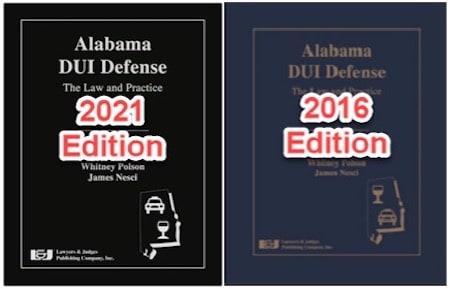
Senior partner Mark Polson has practiced criminal defense in Alabama for over four decades. His son, Whitney Polson, focuses on DUI cases and co-wrote a key book on Alabama DUI law. Together, they represent clients facing DUI charges in Hoover and Jefferson County. You need counsel who understands how these cases move through the local court system.
Alabama is an implied consent state. Under Alabama law, anyone who drives a motor vehicle on Alabama's public highways has agreed to chemical testing. This testing covers blood, breath, or oral fluid if you are lawfully arrested for DUI. If you refuse a chemical test, your driving privileges are suspended for 90 days. The suspension runs one year with one prior alcohol or drug enforcement contact in the past 10 years, three years with two, and five years with three or more. Refusing a blood test after a crash that killed or badly hurt someone brings a two-year suspension. Alcohol testing determines your blood alcohol level as close to driving time as possible. This evidence often becomes the centerpiece of the prosecution's case – and a prime target for the defense.
On top of the court case, a DUI arrest starts a second case with the Alabama State Law Enforcement Agency (ALEA). You have a short window to ask for a hearing to fight the license suspension. Acting fast after an arrest can save your right to drive.
Penalties for a DUI in Alabama depend on several factors. These include your BAC level, other traffic violations during arrest, and prior DUI convictions. Alabama law separates misdemeanor and felony DUI charges. Penalties grow steeper with each offense. A misdemeanor DUI lawyer helps clients facing first through third offenses. A felony DUI attorney handles fourth offenses and beyond.
Under Alabama law, the first three DUI convictions are misdemeanors. Penalties increase with each offense.
First Offense DUI – A fine of $600 to $2,100, up to one year in jail, or both, plus a 90-day license suspension. You may stay the suspension by installing an approved ignition interlock device for 90 days. If you refused a chemical test, the interlock requirement extends to one year. If your blood alcohol content was 0.15% or higher, the interlock requirement extends to one year and the minimum punishment at least doubles. If you had a child under 14 in the vehicle, the interlock requirement extends to one year, and for a driver over 21 the minimum punishment at least doubles. If someone was injured, the interlock requirement also extends to one year.
Second Offense DUI – A fine of $1,100 to $5,100 and up to one year in jail. You must serve at least five days in jail or 30 days of community service. This time cannot be suspended or probated. The Alabama State Law Enforcement Agency revokes your license for one year. An ignition interlock device is required for two years after license reinstatement.
Third Offense DUI – A fine of $2,100 to $10,100 and up to one year in jail. You must serve at least 60 days. This time cannot be suspended or probated. Your license is revoked for three years. An ignition interlock is required for three years after reinstatement.
A fourth or later DUI conviction is a Class C felony, counting prior DUI convictions from the last 10 years. A previous felony DUI conviction makes every later DUI a felony, regardless of the date of the earlier felony conviction. A felony DUI attorney handles these cases because stakes are much higher. A Class C felony carries imprisonment of at least one year and one day, up to 10 years. Fines range from $4,100 to $10,100. A minimum of 10 days in jail is mandatory.
The remainder of the sentence may be suspended or probated only if, as a condition of probation, you enroll in and finish a state-certified chemical dependency program. Your license is revoked for five years. An ignition interlock device is required for four years after reinstatement. The court may also place you on house arrest with electronic monitoring during probation.
Note: Alabama's habitual felony offender law does not apply to felony DUI convictions. But prior DUI convictions – misdemeanor or felony – may affect sentencing under Alabama Sentencing Guidelines.
A DUI conviction carries serious consequences at every level. A conviction can affect employment, professional licensing, and personal relationships. That is why working with experienced counsel matters. You need someone who knows how to challenge evidence and protect your interests.
A DUI charge in Alabama does not require alcohol. Under Alabama law, you can be charged with DUI for driving under the influence of a controlled substance. You can also be charged for driving under the combined influence of alcohol and a controlled substance. You can be charged for driving under the influence of any substance that leaves you unable to drive safely, whatever the substance is. This includes illegal drugs, prescription medications, and over-the-counter substances.
Anyone facing these charges should consider talking with a DUI drug lawyer. This attorney understands how prosecutors build drug-impairment cases. Unlike alcohol DUI cases, there is no per se blood alcohol threshold. The prosecution must prove the substance actually impaired your ability to drive safely.
Prosecutors typically use Drug Recognition Expert (DRE) evaluations and blood toxicology results. A DRE officer follows a multi-step protocol. The officer assesses physical signs of drug impairment. These signs include pupil dilation, muscle tone, vital signs, and behavior. Blood draws go to a state lab for testing. Each step creates potential grounds for challenge.
Common defenses in drug DUI cases include chain-of-custody issues with blood samples. They also include errors in laboratory testing and lack of a clear link between the substance and actual driving impairment. Many prescription medications may show in toxicology results long after their effects wear off. The presence of a substance in the blood does not automatically prove impairment at the time of driving.
Most Hoover DUI cases settle through negotiation before trial. But trial-ready preparation leads to better outcomes at every stage. This includes plea talks. When prosecutors know the defense is ready for trial, it strengthens the defendant's position.
A DUI trial attorney prepares for trial from the moment you hire them. This starts with discovery review. Review dashcam footage and bodycam video. Obtain breath test calibration records for the Draeger or Intoxilyzer device. Review the arresting officer's reports. Errors in any of these areas can support a motion to suppress evidence.
Motion practice is a critical phase of DUI courtroom representation. A motion to suppress may challenge whether the traffic stop itself was legal. The question is whether the officer had reasonable suspicion to pull you over. Another motion can go after breath test results if the device was not calibrated right. If the test steps were not followed, the evidence may be thrown out. Evidence that is thrown out can weaken or sink the State's case.
If the case goes to trial in Jefferson County, jury selection becomes important. DUI cases carry strong public opinions. Identifying jurors who can fairly evaluate evidence matters. Cross-examination of the arresting officer often focuses on field sobriety test administration. It also focuses on the officer's training and whether environmental conditions affected the results. Poor lighting, uneven pavement, and weather can all matter.
Defense lawyers may also bring in their own forensic witnesses. A lab witness can test how sound the chemical results are. A crash witness can speak to whether the driving pattern showed impairment. Those witnesses can move the case from assumed guilt to real doubt.

A DUI conviction in Hoover Municipal Court is not necessarily final. Alabama law provides a two-tier appeal path. A DUI appeal attorney can guide you through the process.
The first level of appeal is a trial de novo in the circuit court for the circuit where the violation occurred – the Jefferson County Circuit Court for a violation in Jefferson County. A trial de novo means the case is retried from scratch. A new judge – or a jury, if you request one – hears the case. You must file notice of appeal and give an appeal bond within 14 days of the entry of judgment. The municipal court may waive the bond if you show you cannot afford one. Missing this deadline forfeits the right to a de novo appeal.
A trial de novo is a valuable opportunity. It allows the defense to present the case fresh. Evidence that may have been improperly admitted in municipal court can be challenged. Additional witnesses or expert testimony can be presented. Many DUI cases achieve better outcomes at the circuit court level.
If the circuit court goes against you too, you may appeal to the Alabama Court of Criminal Appeals. That court reads the trial record. No new evidence is allowed. Common points on appeal are breath test results that should not have come in, proof too thin to support the verdict, and errors in the sentence.
An appeal is a separate undertaking from the original defense. It requires a preserved trial record. This means objections must have been raised at trial to be considered on appeal. This is why thorough trial preparation matters. It matters even in cases that seem difficult to win at the municipal court level.

A nurse DUI lawyer understands that a DUI charge creates two separate legal battles for healthcare professionals. There is the criminal case and the licensing board investigation. Reporting duties for Alabama nurses come from Board of Nursing rules, not from the DUI statute. Under Alabama's nursing law the Board may discipline a nurse convicted of a felony, convicted of a crime involving moral turpitude, or found unfit to practice because of alcohol use.
A nurse who voluntarily seeks treatment may enter the Board's Disciplinary Alternative Program (VDAP). The Board may then hold off on formal discipline if it finds the nurse can be treated and the public is not at risk. But the program has rules and limits of its own. The Board looks into the matter apart from the court case. A good result in court does not clear the license issue on its own.
Other Alabama boards set their own reporting duties by rule. Doctors, pharmacists, lawyers, CDL holders, and teachers all face fallout at work from a DUI charge. Each board has its own rules on what you must report, how it looks into the matter, and what it can do to you.
A defense plan for a licensed worker has to account for the board as well as the court. A plea that clears the criminal case fast may be the wrong move if it sets off board action on its own. Your lawyer should weigh what each path does to your license – dismissal, diversion, plea, or trial – and only then recommend one.

A DUI charge in Hoover carries consequences that extend well beyond the courtroom. A conviction results in a criminal record, license suspension, and substantial fines. There are day-to-day costs too. You must file SR-22 insurance, which drives the price up sharply. You may have to fit an ignition interlock. The charge can follow you onto job forms and background checks for years. A DUI charge attorney who understands these overlapping consequences can build a strategy that addresses all of them.
The Hoover DUI diversion program may offer an alternative path for eligible defendants. Alabama law recognizes pretrial diversion in municipal court and charges two mandatory $100 fees on successful completion. Eligibility criteria and program requirements vary. Defendants should discuss this option with counsel early in the process.
Time is a critical factor after a Hoover DUI arrest. Under Alabama's implied consent law, ALEA may suspend driving privileges administratively. This is separate from any court action. You have 10 days from the notice of intended suspension to request an administrative hearing. Requesting a hearing does not stay the suspension, which takes effect 45 days after the notice. The suspension lands before the criminal case even reaches court.
You may be able to get a limited license with an ignition interlock, based on the facts of your case. The interlock makes you give a breath sample below 0.02% BAC to start the car. It lets you keep driving, but it is monitored and it costs money.
For anyone facing a DUI charge in Hoover, prompt action and experienced counsel may make a significant difference in the outcome. Contact Polson & Polson, P.C. to discuss your case and understand your options.
The Hoover Municipal Court is located at 2020 Valleydale Road, Hoover, AL 35244. Normal court hours are 8:00 AM to 5:00 PM, Central Standard Time.
Arraignments for DUI charges are scheduled after the arrest is processed. At a first appearance, the judge reads the charges, confirms your identity, addresses bond conditions, and sets future court dates. Arrive early and bring your citation, bond paperwork, and any documents related to the arrest.
To pay a ticket or check a court date online, use the court's Pay Ticket PORTAL. For bonding and warrant inquiries, contact the Hoover Police Department.
If you are facing DUI charges in Hoover, Polson & Polson, P.C. offers a free initial case evaluation. When you call, have your citation, bond paperwork, and any breath or chemical test results available. The attorney can assess your situation quickly.
The 10-day window to request an administrative license hearing through ALEA runs from the notice of intended suspension the officer serves at arrest. Waiting too long waives the hearing and judicial review, though you may still ask ALEA for an administrative review within 90 days. This happens before your criminal case is even heard. Prompt action protects your rights and preserves your options.
Payment plans are available for legal fees. Call Polson & Polson, P.C. at (205) 401-3171 to discuss your Hoover DUI charge and schedule your consultation.

Under Alabama law, a DUI is charged as a Class C felony on a fourth conviction, counting prior DUI convictions from the last 10 years. A previous felony DUI conviction makes every later DUI a Class C felony, regardless of the date of the earlier felony conviction. A Class C felony carries imprisonment of at least one year and one day, up to 10 years. Fines range from $4,100 to $10,100. A minimum of 10 days in jail is mandatory. The driver's license is revoked for five years. An ignition interlock device is required for four years following reinstatement. A felony DUI attorney can evaluate your prior conviction history and determine whether any prior convictions may be subject to challenge.
Yes, a defendant convicted of DUI in Hoover Municipal Court may appeal to the circuit court for the circuit where the violation occurred, the Jefferson County Circuit Court for a violation in Jefferson County. The appeal allows for a trial de novo – a completely new trial. Notice of appeal and an appeal bond must be filed within 14 days of the entry of judgment. At the circuit court level, the case is heard fresh. You may present new evidence, call additional witnesses, and request a jury trial. If the circuit court conviction is also unfavorable, a further appeal may be filed with the Alabama Court of Criminal Appeals. That court reviews the trial record for legal errors.
Reporting duties for Alabama nurses come from Board of Nursing rules, not from the DUI statute, and the Board may discipline a nurse convicted of a felony or found unfit to practice because of alcohol use. The Board may initiate its own investigation independent of the criminal case. A nurse who voluntarily seeks treatment may enter the Board's Disciplinary Alternative Program (VDAP) instead of facing formal discipline. Because the Board acts apart from the court, a good result in court does not settle the license question. A nurse facing a DUI charge should talk through both sides with a lawyer before taking any plea or deal.

The first appearance – or arraignment – takes place at the Hoover Municipal Court at 2020 Valleydale Road. At this hearing, the judge reads the formal DUI charges. The judge checks who you are, goes over bond terms, and sets your next dates. You may enter a first plea. Having a lawyer there matters. Your lawyer can speak to bond terms, ask the State for its proof, and start to spot problems with the arrest or the proof. Bring your citation, bond paperwork, and any documents related to the arrest.
Yes, under Alabama law, a person may be charged with DUI for driving under the influence of any substance that leaves the driver incapable of driving safely. That covers drugs a doctor gave you, such as pain pills, anxiety pills, sleep aids, and muscle relaxers. A valid prescription is not a defense if the drug did in fact impair your driving. The State leans on blood tests and Drug Recognition Expert checks to prove it.
The quality of legal services performed by this firm is not represented to be greater than the quality of legal services performed by other lawyers at other law firms. The hiring of legal counsel for a Hoover traffic ticket is an important decision. Base the decision on more than advertisements alone.


